


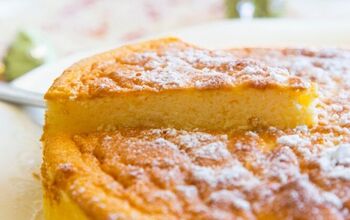
“Chitau Pitha – Traditional Odia Steamed Rice Pancake” 🌿🥥
When festivals or special days arrive in Odisha, the fragrance of traditional dishes fills every household, binding generations together in a thread of love, memory, and taste. Among those timeless delicacies, Chitau Pitha holds a very special place. It is not just a dish; it is an emotion, a connection to roots, and a reminder of the hands that lovingly prepare it. Recently, when I made Chitau Pitha for my niece who lives far away in the USA, I was reminded of how food becomes the sweetest bridge between families separated by distance.
Growing up, we always knew that the arrival of Chitau Amavasya would mean waking up to the sounds of grinding, steaming, and laughter in the kitchen. My grandmother would always say that this pitha was as much about tradition as it was about feeding the soul. We children would wait eagerly, peeking into the heavy lids of steaming pots, stealing glances and hoping to be the first ones served. The pitha, soft as a pillow and delicately flavored, carried with it the essence of home.

Years later, the tradition has passed on to us. While my niece may be oceans away, her love for home-cooked food has never diminished. Whenever she visits India, she insists on eating all the traditional recipes that remind her of childhood holidays spent in the warmth of her grandparents’ home. She especially has fond memories of sitting in the verandah, holding a plate of freshly made Chitau Pitha, and eating slowly as everyone gathered around, sharing stories. So, when I decided to prepare it again, I thought of her instantly.
The act of making this pitha is like weaving a story. Each step carries the memory of the women in our family who prepared it before us, with patience and devotion. It is not just about mixing or cooking—it is about invoking the festive spirit, about remembering ancestors, and about carrying forward the cultural rhythm of Odisha. Even though the recipe is simple, the joy it brings is profound. As the soft pithas began to stack one over the other on my kitchen counter, I could almost imagine my niece’s smile lighting up from thousands of miles away.

Food has that magical power, doesn’t it? It transcends geography and time. I may be in my kitchen here in India, but when I send her pictures of the dish, or when she tries her own version abroad, it is as if we are sitting at the same table. In that moment, the distance disappears, and we are connected through love and tradition. She often tells me that while the food she eats in the US is good, nothing compares to the comfort of a home-cooked meal infused with care.
My niece also has her own little favorite twist to this tradition—she absolutely loves enjoying Chitau Pitha with freshly prepared mint coconut chutney. The cool freshness of mint blended with the earthy sweetness of coconut makes the pitha even more delightful for her. She says it reminds her of summer days in India, when every meal carried a burst of freshness from the garden. Watching her relish that combination always brings an extra joy to the table, because it shows how traditions can be cherished while still embracing personal flavors.

Making Chitau Pitha also reminds me of the small details that make family traditions so meaningful. The way my mother would hum a bhajan while preparing it, the way my grandmother would insist on offering the first pitha to Lord Jagannath, or the way we children would compete to see whose pitha had the neatest round shape—these little rituals stitched together a fabric of togetherness. It wasn’t just food; it was a celebration of identity, belonging, and affection.
Now, as I prepare it for my niece, I feel that same spirit alive in me. Though she may be far away, she is still part of this chain of tradition. I imagine her recreating these dishes in her own kitchen one day, sharing them with friends who may have never heard of Chitau Pitha before. In that way, our heritage travels across borders, carrying with it the flavors and stories of Odisha.
There is a quiet satisfaction in knowing that such recipes will never fade. They live on not just in cookbooks but in the hearts of children who grow up cherishing them. My niece represents that continuity—someone who may have grown up away from Odisha but still holds the same love for its food and culture. When I made the pitha for her, it was my way of sending her a piece of home, a slice of childhood, and a reminder that no matter where she lives, she will always belong to this family and its traditions.
As I sat down to eat the freshly prepared Chitau Pitha, I closed my eyes and thought of her. Perhaps she too was having her morning coffee in the US, unaware that across the world, her aunt was thinking of her with every bite. That is the beauty of food—it makes distances smaller, it makes memories stronger, and it makes family bonds unshakable. Chitau Pitha will always remain more than a festive dish for us. It is a symbol of love passed from one generation to the next, from one kitchen to another, and from one heart to another—no matter how far apart they may be.
“Chitau Pitha – Traditional Odia Steamed Rice Pancake” 🌿🥥
Recipe details
- 6 Pithas
- Prep time: 4 Hours Cook time: 20 Minutes Total time: 4 hr 20 min



























Comments
Share your thoughts, or ask a question!